


Thorsten Amend-Schnaar interviewed by Stefan Rullkötter
From BÖRSE ONLINE, issue dated 6 June 2026

Warning of wealth erosion
The underestimated risk in succession planning
BÖRSE ONLINE: In Germany, there are 3.8 million self-employed people. By 2030, an estimated 186,000 business successions will need to take place as owners step back from management for age-related reasons. Expert Thorsten Amend-Schnaar explains how a seamless transition can succeed and what risks may arise.
For many entrepreneurs, their own company is their largest asset – why is succession increasingly becoming a matter of wealth preservation?
Thorsten Amend-Schnaar: For many entrepreneurs, the largest share of their wealth is not held in an investment portfolio, but in their own company. This wealth is only truly secure if the company can continue to be managed successfully even without the entrepreneur who has shaped it to date.
Succession is therefore not merely a personnel issue. It determines whether a life’s work remains transferable. The value of a company does not depend only on machinery, property or customer contracts, but also on trust, leadership, culture and established relationships.
What are the consequences if this is not taken into account?
If these factors are lost during the transition, company value can quickly be lost as well. Good succession planning therefore protects both the future of the company and the private wealth of the business-owning family.
Where do you see the greatest risks for entrepreneurs’ private wealth if succession is not planned early and in a structured way?
The greatest risk is gradual value erosion. It rarely happens overnight. It often begins when decisions are postponed, executives become uncertain, banks start asking more detailed questions, or customers sense that the future has not been clarified.
Many entrepreneurs underestimate how strongly their company depends on them personally. If key customer relationships, knowledge and decisions are not transferable, a valuable business can quickly become a difficult business to sell.
Do you see any further risks here?
There are also conflicts within the family or among shareholders, as well as the risk of appointing the wrong successor. A gut-driven succession decision may work out well. But when it comes to life’s work, I would not rely on instinct alone.
What role do factors such as valuation, timing and the market environment play – issues that are also relevant for investors?
They play a major role. Entrepreneurs understandably tend to think about their own company in a more long-term and emotional way than financial investors. Nevertheless, market principles apply here as well.
Valuation depends on earnings power, growth prospects, management quality, dependencies and the market environment. If succession is unresolved, a risk discount is almost inevitable. Investors, banks or buyers will rightly ask: how stable is this company if the person who has shaped it is no longer leading operations?
What can happen if a succession solution is repeatedly postponed?
Timing is also critical. Those who only act once pressure is high lose options. Good succession takes time: for clarification, selection, trust-building and handover. An entrepreneur does not have to look at their company like a listed share. But they should understand that their company, too, is exposed to a market.
In your view, what are the most important steps in turning business succession into successful wealth transfer?
At the beginning, there needs to be clarity about the objective. Should the company remain within the family? Should an external managing director be appointed? Is a sale conceivable? Or is a hybrid model required, involving an advisory board, a family office or a strategic partner?
After that, roles, responsibilities and governance must be clearly defined. Especially in family businesses, it is not enough simply to name a successor. It must be clear who will lead, who will provide oversight, who will hold ownership stake and who will deliberately stay out of operational matters.
What further questions should be addressed?
An honest assessment of the people involved is also crucial. Does the next generation have both the will and the ability to lead? Are there internal candidates with potential? Or is external leadership required? Professional competence is important, but it is not enough. What matters is whether a person can lead effectively in this environment.
Are you currently observing changes in the market – for example due to investors, family offices or increasing capital interest – that entrepreneurs should take into account in their succession planning?
Yes, clearly. Germany’s Mittelstand is highly attractive to investors, family offices and strategic buyers, especially when companies are profitable, well managed and clearly positioned. This opens up additional options for entrepreneurs.
But capital alone does not make a good succession solution. What matters is whether an investor fits the company, its culture and its long-term objectives. A family office can work very well if it takes a long-term view and respects the company’s entrepreneurial identity. A financial investor can make sense if growth or professionalization are the priorities.
What is your general advice on wealth transfer?
Entrepreneurs should understand their options early. Not every sale means a loss of control. Not every family-internal solution is automatically the best one. And not every external managing director fits the company’s DNA. Those who start early have choices. Those who start late are under pressure. And pressure is rarely a good adviser – neither in financial investments nor in the transfer of a company.
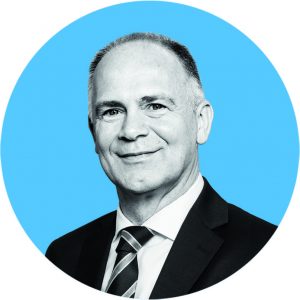
About Thorsten Amend-Schnaar
Thorsten Amend-Schnaar is Managing Partner of the executive search consultancy Höchsmann & Company. The consulting boutique supports mid-sized and family-owned companies as well as international companies in executive search, board search, succession planning, management diagnostics and leadership coaching.